

A good running cadence typically falls between 165–180 steps per minute for most runners, helping improve efficiency and reduce injury risk.
If you’ve spent any time in the running or triathlon world, you’ve probably heard people talk about cadence. Some runners obsess over it, others barely think about it, and a lot of beginners don’t understand why it matters at all.
But cadence, the number of steps you take per minute, can influence your running economy, speed, injury risk, and how your entire stride feels. It’s one of those “small hinges that swing big doors.”
In this article, I’ll walk you through what cadence actually is, why running with a higher cadence is often more efficient, how factors like speed and runner height influence your ideal cadence, and my personal journey going from a cadence of 150 to around 170. That change alone helped me run faster at the same heart rate and drastically reduced the calf pain I used to struggle with.
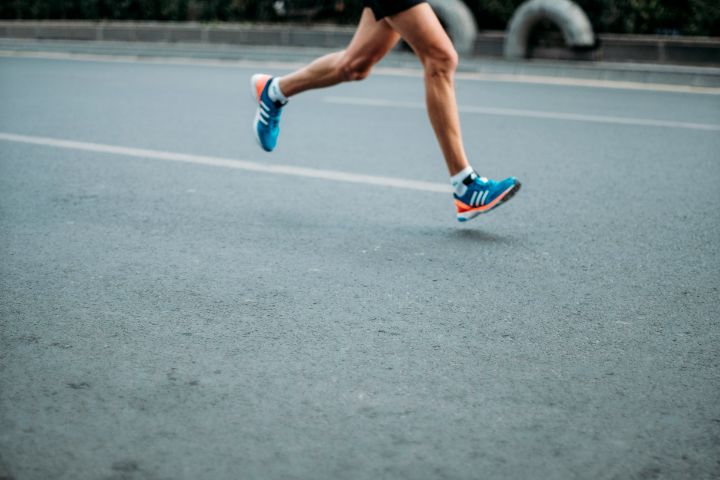
What Is Cadence In Running?
Cadence, also called steps per minute (SPM), is simply the number of steps you take in one minute while running. Most modern watches, Garmin, Polar, Coros, and even newer Apple Watches, track your cadence automatically.
To give you a general idea:
- Low cadence: Below 160
- Moderate cadence: 160–170
- High cadence: 170–185
- Elite runners: Often 180+ at faster paces
But here’s the thing: there is no single “perfect” cadence for everyone. What matters is understanding what cadence does to your running form.
Why Running Cadence Matters
Your cadence impacts everything from how much force your body absorbs to how efficiently you move forward. Here’s why it matters more than most people think.
1. Higher Cadence Reduces Impact and Lowers Injury Risk
When runners take fewer steps per minute, their stride tends to get longer. They often overstride, meaning they land with their foot too far in front of their body. Overstriding increases the braking forces with every step and sends more shock up your legs.
A higher cadence naturally shortens your stride, promoting:
- Landing under your center of mass
- Smoother forward movement
- Lower ground-reaction forces
- Reduced pounding on your knees and hips
That alone makes a higher cadence one of the simplest ways to prevent common running injuries.
2. Higher Cadence Improves Running Economy
Running economy, how efficiently you use oxygen, is one of the biggest predictors of performance. Studies consistently show that many runners become more efficient when they increase cadence slightly.
A higher cadence:
- Reduces vertical oscillation (bouncing)
- Keeps your feet on the ground for shorter periods
- Makes your stride smoother and more controlled
It’s like upgrading your running technique without hiring a coach.
3. Higher Cadence Helps You Maintain Speed Without Increasing Heart Rate
This one surprised me the most on my own journey. When I increased my cadence, my pace improved without my heart rate skyrocketing.
By taking quicker, lighter steps:
- You waste less energy
- You maintain a more stable rhythm
- Your body “settles” into a smoother aerobic flow
In other words: more speed without extra effort.
My Personal Experience: From 150 to 170 Cadence
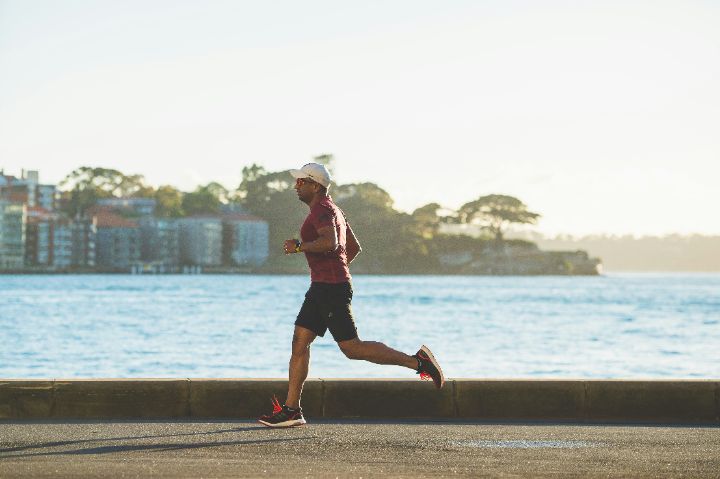
When I started running, my cadence was around 150 SPM. I didn’t even realize it was low, it just felt natural. But after months of training, I constantly battled calf tightness and small overuse injuries, especially when I increased intensity.
At some point I started reading about cadence and decided to experiment.
The first runs felt weird
The first time I tried running at 170, I felt like I was tip-toeing or rushing my steps. My stride felt shorter and less “powerful”, at least that’s what it felt like in my head.
But after a couple of weeks…
- My calves stopped hurting
- My pace increased without pushing harder
- My heart rate stayed lower at the same speed
- I felt smoother and lighter during runs
It almost felt like my entire form clicked into place.
I’m not saying everyone needs to hit 170 exactly, but increasing cadence by even 5–10 steps per minute made a massive difference for me.
Cadence Depends on Speed, But Also Your Height
A lot of runners think “everyone should run at 180,” but that’s not how cadence works.
1. Speed influences cadence
The faster you run, the more your cadence naturally increases.
If you run at different paces, you’ll notice:
- Easy pace → lower cadence
- Marathon pace → mid-range cadence
- Interval pace → high cadence
Trying to force an elite-level cadence at an easy pace can create unnecessary tension.
2. Height and leg length influence stride
Taller runners with longer legs typically have:
- Slightly lower cadences
- Naturally longer stride lengths
Shorter runners often have:
- Higher cadences
- Shorter, quicker steps
So your optimal cadence depends partly on your anatomy.
This is why it’s crucial not to copy elite runners blindly, their speed, body mechanics, and experience levels are completely different.
How to Increase Your Running Cadence Safely
If you want to improve your cadence, the key is to do it gradually. A sudden jump of 15–20 SPM can stress your calves and Achilles.
Here’s a safe way to do it.
1. Increase by 5% at a time
If your current cadence is 150:
- Aim for 155
- Then 158–160
- Then 162–165
- And so on
Small increments feel natural and let your muscles adapt.
2. Use a metronome or music with the right BPM
This is one of the easiest tricks.
Apps and smartwatches allow you to run with a beep at your target cadence. Or you can simply run to songs in a specific BPM range:
- 155–165 BPM for beginners
- 165–175 BPM for experienced runners
Music helps your body match rhythm without overthinking.
3. Focus on form, not speed
When practicing cadence:
- Keep your stride relaxed
- Don’t push harder
- Avoid “choppy” steps
Your goal is shorter strides, not faster pace.
4. Add cadence drills
A few great drills to make higher cadence feel natural:
- Quick feet drills: Run in place with tiny steps for 20–30 seconds.
- Strides: Short 20–30 second accelerations focusing on quick, light steps.
- Downhill cadence practice: Gentle descents encourage faster leg turnover, but use caution.
Practicing just a few minutes per run helps your natural cadence improve.

Signs You May Need a Higher Cadence
If any of these sound familiar, cadence could be the missing piece:
- Your calves get overloaded easily
- Your knees hurt after long runs
- You feel like you’re “slapping” the ground when you land
- Your feet land in front of your body (overstriding)
- Your stride feels heavy or bouncy
- You fatigue quickly at moderate paces
When I read through that list months ago, I checked almost every box.
How Higher Cadence Helped My Calves (and Why)
When I ran with a cadence of 150, I took long, reaching steps. That caused my calf muscles, especially the soleus, to take a lot of the load during the landing phase.
When I increased cadence:
- My foot landed underneath me, not in front
- My stride shortened
- The impact shifted more to my glutes and hamstrings
- I stopped pushing off so aggressively with my toes
The result?
My calves went from being stiff and painful nearly every run to feeling almost completely fresh.
If you struggle with calf pain, especially as a triathlete who also cycles a lot, increasing cadence is one of the best “form fixes” available.
The Long-Term Benefits of Higher Cadence
After months of running with a higher cadence, I can confidently say the effects go far beyond technique.
Here’s what I noticed:
- Fewer injuries: Especially calf and Achilles issues.
- Lower heart rate at same speed: This is one of the best indicators of improved running economy.
- More speed on race day: Cadence becomes automatic, even under fatigue.
- Better posture and stability: Shorter steps keep you upright and balanced.
- Smoother running rhythm: Running feels like a controlled, repeatable movement rather than a pounding effort.
These benefits compound over time, especially during longer triathlon training blocks where consistency matters more than anything.
What Is the Ideal Cadence?
The truth is: there’s no universal number.
But research shows the ideal cadence for most runners tends to fall between 165–180 steps per minute, depending on:
- Speed
- Height
- Running experience
- Level of fatigue
- Terrain
A good rule of thumb:
Increase your baseline cadence by 5–10% and see how your body responds.
Final Thoughts
Running cadence is one of those metrics that seems unimportant until you finally understand what it does for your efficiency, speed, and injury prevention. For me, increasing my cadence from around 150 to 170 completely changed how I run. I’m faster at the same heart rate, my calves no longer scream during every session, and I feel smoother and lighter on my feet.
If you’re training for a triathlon, or even if you’re just trying to become a stronger runner, cadence is one of the best tools you can consciously adjust, and the results are often surprisingly fast.
Start small, stay patient, and let your body discover the rhythm that suits you best.